Flourish Toys
Seven in One Matching Board | Ages 2–6 | Alphabet & Pattern Recognition
Seven in One Matching Board | Ages 2–6 | Alphabet & Pattern Recognition
Couldn't load pickup availability
Seven games. One board. The full range of what a 2 to 6 year old brain is hungry for — delivered through play they will come back to every single day.
That simple act of placing the right piece in the right slot is one of the most powerful learning experiences a preschooler can have. Not because it's educational. Because they can't stop doing it.
Perfect for: Ages 2 to 6
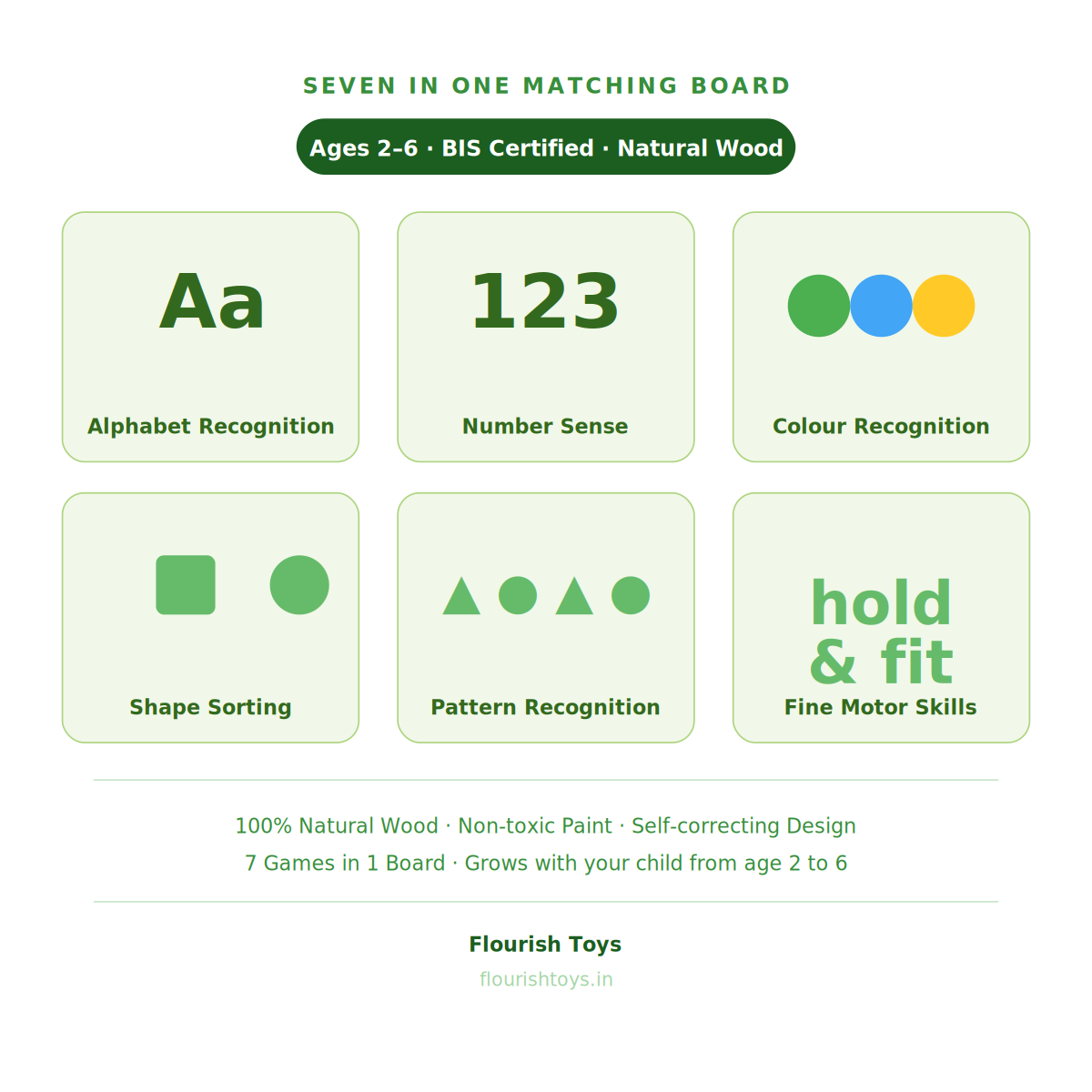
Aa Alphabet Recognition 123 Number Sense ● Colour Recognition ■ Shape Sorting ◆ Pattern Recognition ✋ Fine Motor Skills
Why this toy
- Seven games, one board — never outgrown. Colour matching at age 2. Alphabet recognition at 3. Number sense at 4. Pattern completion at 5. Sequencing at 6. The board grows with your child across four years of meaningful play.
- Self-correcting design — no adult required. Each piece either fits or it doesn't. Your child gets immediate, honest feedback without needing you to tell them they got it right. This is how independent learners are built.
- Repetition that feels like play. The child who matches the letter A to its slot for the hundredth time is not bored. They are building a neural recognition circuit that will fire automatically when they see that letter in a book at age five.
- Beautiful enough to leave out. Crafted from natural wood with non-toxic paint. Looks like something worth keeping, not just a toy that gets thrown in a box.
At This Stage
Between ages two and six, the language areas of the brain — Broca's area and Wernicke's area — are developing at a rate they will never approach again. A child at this stage learns approximately ten new words per day without explicit teaching. The brain is a learning engine running at full capacity. What it needs is not instruction. It needs material — rich, varied, repeated encounters with the symbols and patterns that literacy and numeracy are built from.
The developmental psychologist Jean Piaget documented what he called the preoperational stage — the period between two and seven in which children are building the symbolic foundations that logical thought will eventually rest on. Pattern recognition is one of those foundations. The child who has matched the letter A to its partner a hundred times is not memorising. They are building a neural pattern, a recognition circuit, that will operate automatically when they encounter that letter in a book at age five or six. The matching board is not preparation for learning to read. It is the beginning of learning to read.
How to Play
- Choose one of the seven games — alphabet, numbers, colours, shapes, animals, patterns, or sequences.
- Lay out the matching pieces and invite your child to find where each one belongs.
- As they match, name each letter, number, colour, or shape together — the conversation is as important as the matching.
- As your child grows, introduce new games. The board meets them at every stage from 2 to 6.
What's in the Box
- 1 × Seven in One Matching Board
- Full set of matching pieces for all seven games
- Care instructions card
Product Details
| Age Range | 2–6 years |
| Material | 100% Natural Wood |
| Finish | Non-toxic, child-safe paint |
| Certification | BIS Certified |
| Skills Built | Alphabet Recognition, Number Sense, Colour Recognition, Shape Sorting, Pattern Recognition, Fine Motor Skills |
| Games Included | 7 |
| Play Type | Solo and guided |
| Assembly | Ready to play |
Frequently Asked Questions
Is the Seven in One Matching Board BIS certified?
Yes. Like all Flourish toys, it carries BIS certification — India's highest toy safety standard — and is made from 100% natural wood with non-toxic, child-safe paint throughout.
What age is this suitable for?
Designed for ages 2 to 6. At 2, children engage with colour and shape matching. By 3–4, alphabet and number games become developmentally appropriate. By 5–6, pattern and sequencing games offer genuine challenge. The board spans four years of meaningful play.
Can a 2-year-old use this independently?
With initial guidance, yes. The self-correcting design means a 2-year-old can play without constant adult input. Play alongside your child early on, naming what they match. Confidence builds quickly and independent play follows.
How is this different from a simple alphabet puzzle?
A simple alphabet puzzle teaches one thing. This board teaches seven — and the range matters. The preschool brain builds foundational literacy and numeracy through varied, interconnected exposure to the full range of symbolic systems: letters, numbers, colours, shapes, and patterns.
How do I clean it?
Wipe with a damp cloth and mild soap. Avoid soaking in water. The sealed, non-toxic finish makes it easy to clean and hygienic for daily use.
Share